
CONTRIBUTOR SPOTLIGHT:
Interview with Elina Kumra
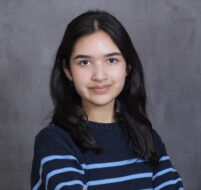
Rappahannock Review Nonfiction Editors: We love how in “Beneath the Broken Arc,” you blend current events into a creative nonfiction essay. How did you decide to thematize what’s happening in Gaza through critiquing the “hero’s journey”?
Elina Kumra: When deciding to thematize Gaza’s realities through critiquing the “hero’s journey,” it struck me that traditional narrative frameworks—often so neat and comforting—fail profoundly when applied to lives experiencing such relentless uncertainty. Gaza’s truth defies simplification. I wanted to challenge that paradigm, making readers confront a reality where survival itself becomes heroic, yet utterly devoid of neat resolution or triumph.
RR: This reminded us of other strong historical survivor narratives that humanize the people of a persecuted culture instead of flattening them into a headline. Were there any specific works in that genre influential to you in writing this piece?
EK: Influential to me were powerful historical survivor narratives such as Night by Elie Wiesel and Palestinian Walks by Raja Shehadeh, works that anchor human experience amid political and historical upheaval without reducing individuals to mere headlines. These narratives influenced my writing by underscoring quiet resilience and dignity amidst profound suffering.
To have that sense of one’s intrinsic worth which constitutes self-respect is potentially to have everything: the ability to discriminate, to love, and to remain indifferent. To lack it is to be locked within oneself, paradoxically incapable of either love or indifference. I had not thought much about what self-respect meant in a place where the luxury of introspection is crushed beneath more immediate concerns—food, shelter, the whistle of approaching shells—until I found myself contemplating Gaza through the sanitized distance of literature.
RR: Were there any Gazan testimonies, news channels, or other media that you drew from in particular?
EK: Though my piece is fictionalized, it draws inspiration from testimonies shared through platforms like Al Jazeera, personal narratives featured by B’Tselem and Human Rights Watch, and poignant firsthand accounts circulated by Gazans via social media. These sources provided visceral and emotional authenticity, reminding me constantly of the human lives behind the news.
RR: In the piece, there is a lot of emphasis on the community still thriving in Gaza. How did you decide on what scenes to focus on?
EK: The emphasis on Gazan community resilience emerged organically. I chose scenes that conveyed intimate gestures—moments of tenderness, small acts of courage and solidarity that persisted amid devastation. Scenes of quiet bravery, neighborly care, and familial love became my focus because they highlight the profound dignity of the Gazan people, reminding readers of humanity’s quiet strength even in the harshest conditions.
RR: We admire your focus on Gazan perseverance in the face of tragedy. Do you have any advice for readers who, like you, want to raise awareness for Gaza?
EK: For those wanting to raise awareness, my advice is to humanize the narrative. Avoid reducing Gaza to statistics or geopolitical discussions alone. Instead, amplify individual voices, stories, and art that reveal humanity beneath the headlines. Share narratives that make readers pause and see themselves reflected in another’s struggle, fostering empathy and genuine understanding. Human stories hold immense power; they bridge distances hearts might otherwise never cross.