
CONTRIBUTOR SPOTLIGHT:
Interview with Jane Berg
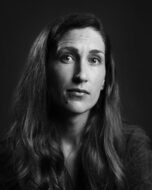
Rappahannock Review Poetry Editors: “Exoskeleton” generated quite the discussion for our team due to its lyrical, mysterious nature. So we wanted to ask, what would you say is the heart of this piece?
Jane Berg: Thank you, the poem is a little bit mysterious to me too. One thing that felt central was the juxtaposition of different textures. What is human is depicted as soft and fragile, compared to the rugged and threatening landscape. Humans are dangerous, but often only in our multitudes. Compared to many creatures our bodies are not very impressive. How many of us would survive without the tools of modern civilization?
RR: There’s a lot of intriguing imagery in this poem, especially the biblical references. How did the details and layers come together for you?
JB: I’m from South Africa and I was there when I wrote this poem, staying at a friend’s cottage in a semidesert region called the Klein Karoo. It is a remarkably biodiverse ecosystem. I was thinking about my childhood, the time I spent immersed in the natural world, and how as I grow older I increasingly feel compressed as though within a shell, or exoskeleton. Yet there’s no going back to that expansive innocence and perhaps your own memories can’t even be trusted. Just as pragmatic realism can disrupt the foundational beliefs we may have been taught.
RR: We love the way you explore vulnerability in this piece. How do you think writing can allow us to show or explore vulnerability, or resist it?
JB: Great question, the poem does certainly invite the reader to consider their physical vulnerability. But the tone is quite remote and allegorical, the speaker seems reluctant to show weakness. I was responding to a prompt that asked us to write an unconventional sonnet. This poem doesn’t use rhyme and also it isn’t exactly emotionally candid, which is a hallmark of many traditional sonnets. But even a poem that resists confession can be evocative, like a conversation that relies on subtext. I think the tension between concealing and revealing in writing is always crucial, it’s just a matter of how much you want to use those elements, like any other literary device.
RR: How have your other creative works and experiences, such as photography, inspired your poetry?
JB: I like working in several genres and mediums because each has its limits. I’m inspired by what one can do that the other can’t quite capture. A photograph relies so much on specificity, while a poem is a kind of snapshot which can be more abstract and universal. What I like about both is how easy it is to start over and try again. The photographer Henri Cartier-Bresson famously said, “your first 10,000 photographs are your worst,” and I think the same could be said about poems; in the sense that you just have to keep trying until you get some right.
RR: Do you have any upcoming writing projects that you’re working on right now?
JB: So many! There’s this novella from my MFA thesis that needs revision, along with several stories. I’m doing so much research for a novel that I’m in danger of killing my interest in the concept altogether. And I would like to write a series of poems from the perspective of a somewhat idiosyncratic character who has a very distinct voice. I’m hoping that this will help me break out of my comfort zone and some of the predictable habits I’ve formed when writing poems.