
CONTRIBUTOR SPOTLIGHT:
Interview with Audrey Fatone
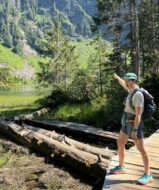
Rappahannock Review Poetry Editors: In “Letter to My Parents I Wrote Before Shaving My Head,” we love the voice and your use of enjambment, rhythm, and sound. What was your process when thinking about sound in this poem?
Audrey Fatone: Sometimes, especially when writing about a heavy subject matter, especially when I am in a depressive state, writing poems with short quick lines comes more naturally. “Guerilla Gardening”, like many other pieces of my writing, was originally written in a format similar to “Letter to My Parents”. Sometimes, I imagine writing with this rhythm is similar to quick but careful steps while trail running. When I listen to the voice of this piece, I hear myself ruminating back and forth while on the trail.
RR: We’re very interested in the central image of “Guerilla Gardening”—there is so much precision and intention in the act of planting seeds at the site of an assault. Can you tell us about the significance of the flowers you chose?
AF: This poem is part of my grappling with the fact that the most traumatic events of my life occurred in oddly beautiful places, beautiful landscapes I often knew and loved intimately. I have been writing poems, where I imagine reclaiming these spaces with native landscaping. Lupine and Coneflower are not only common roadside plants at this particular site but have also become major witnesses to my life. I grew up catching swallowtail butterflies on coneflowers by my mailbox. I spent my twenty-third year trail running along the lupine blooms on the California coast. When I see these plants, no matter the variety or species, it feels like coming home.
RR: Both of these poems feel so personal in how they approach traumatic subject matter; what role do you think writing has, if any, in processing, understanding, or healing from trauma?
AF: I always find it funny when my friends refer to my writing as a ‘hobby.’ Seems like I am always processing something with poetry… I look forward to when I can finally learn how to write without it being part of the healing process.
I find that “Letter I Wrote to my Parents Before Shaving My Head” represents more than a queer coming out story but turning a leaf into a new era of writing for me. I have been writing with a new sense of self-confidence ever since. I am no longer writing the type of poetry where I am begging someone to love me. Now I am like: this is me, and I am a work in progress, but I am proud of who I am as a queer person, outdoor recreationist, and writer.
And yes, I shaved my head and am never going back.
RR: You have described your poetry as a “thank you to the natural world.” How does your relationship with nature shape your writing?
AF: I had an extensional moment earlier this year. I was going through a tough time and decided to commit to moments out of my comfort zone. I went on a long walk in the woods, attempting to navigate without a headlamp under the moonlight. The sounds of the night were overwhelmingly beautiful. Something about traveling without a light made me feel connected to the landscape in a way I never recognized before. Since then, I have identified myself more as a part of the ecosystem instead of a visitor.
RR: Are there any outdoor spaces that you find are most impactful when writing your poetry?
AF: I always find myself coming back to the balsam fir and red spruce forests of the Northeast.