
CONTRIBUTOR SPOTLIGHT:
Interview with Bob Haynes
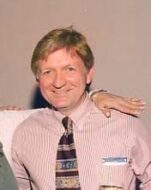
Rappahannock Review Poetry Editors: From its “stilettos the size of hams” to the “pink mess” of an acronym, we love how “When Florida Fights with an Acronym” depicts drag in such a larger-than-life way. How did you craft these images in this poem?
Bob Haynes: When I think about this poem, it seems to me that the issue isn’t so much about painting LGBTQ+ as something larger than life, but rather how to counterbalance the smallness that people, like the current Florida governor, want to inflict on the idea of DEI and acceptance. Accepting a “pink mess” requires a heart larger than one who will diminish or deny equality to those who are marginalized. I want the images in the poem to evoke that sort of expansiveness, which stands in stark contrast to the small-mindedness trying to erase it. While the acronym LGBTQ+ might itself seem overtly grand, it’s merely an attempt to include those who are otherwise left out. A “pink mess” might seem chaotic to some, but embracing it requires a heart as big as the acronym.
RR: There is a beautiful comparison being made between drag queens and religion; what specific aspects of spirituality did you want to incorporate here?
BH: I think about the history of civilization and how there was a time when social structures were controlled by powerful women, especially women such as Enheduanna, who was not only the first known author, but also a high-priestess and religious leader. I often wonder what happened that caused that power to be taken away, and why. But to answer your questions, I think anything can be religious with the proper rituals and meditation. Just as Enheduanna’s hymns and rituals gave voice to her era’s spiritual needs, today’s drag queens might be our best disciples to offer a kind of modern liturgy for self-expression and community.
RR: We’re interested in the complicated relationship between glamor and violence here, with phrases like “bedazzled bruises” and “sequins and wigs.” Can you talk about how you went about writing on those themes and the drag queen experience?
BH: I do think violence is often directed at the most glamorous and beautiful things. It isn’t necessarily restricted to LGBTQ+ communities or drag queens, but you don’t have to look very far to notice the tendency that beauty, whether in people, art, or nature, attracts both admiration and destruction. Lately, the politics of hate, not just in Florida, exacerbates such violence.
As for the phrases, “bedazzled bruises”—other than being somewhat alliterative—happened when I needed to add a notch in my dog’s collar and found an old bedazzler tool hidden away with an old sewing machine. Perhaps the bedazzler made me subconsciously think about how something ordinary as pain—whether personal or societal—can be turned into something dazzling. I do think one of the powers of art is to reimagine hardship as something we not only ensure but embrace.
As for “sequins and wigs” I mostly liked the music in the sound of the short “i”s. I don’t want to overthink what I intended more than how sequins, wigs, and glitter are not just decorations, but a kind of defense against ridicule. The phrases came together more or less organically through their sounds and their juxtaposition in meaning.
RR: How has your academic experience influenced your writing?
BH: I teach English and see tremendous value in teaching children to read. If a drag queen can instill the mystery and wonder that reading brings to children, then education is better because of it, not worse off. When it comes to fostering a love of reading and storytelling in young people, what could be better to celebrate the diversity of literature with a diversity of voices. If a drag queen can inspire a child to pick up a book or view the world with curiosity and wonder, then we are all enriched because of it.
RR: What is the best drag show you’ve ever been to?
BH: I don’t know what “best” means with regards to human beings just trying to be themselves. I’ve never been to a live show by someone like RuPaul, who is clearly excellent. But most of the shows I’ve seen have all had the intentions of being fun and bringing laughter and joy to the audiences. It’s hard to say what “best” means because each show creates its own energy. I would argue that “memorable” would be a better way to describe the performances I’ve seen. The ones where the performers are comfortable being themselves, and invite their audience to celebrate with them, are the most memorable.