
ISSUE 12.2
SPRING 2025
welcome
issue contents
> fiction
> nonfiction
> poetry
> art
contributors
interviews
our editors
Barbara Krasner
Tesserae
Two large red flags bearing the Soviet hammer and sickle snapped in the smoky air at the Zaromb train station. A large five-pointed star stood out on the locomotive. Yankel Dovid had been coming to the station daily now for weeks since the Soviet occupation. Each morning the train greeted the bezshentses—the refugees who found their way to Zaromb, a border village on the Soviet side of Poland. They sat on their heirloom-filled cardboard suitcases and baskets, their crying children hanging onto the threads of their tattered clothes as if embroidered. The children cried out for warmth and bread in the morning dust. Under the train windows hung posters, “Come find good fortune on Soviet land.”
Yankel Dovid remembered the days just twenty years ago when there was no train station. When he and his older brother Isaac would kick stones along the unnamed road from the market square to Leshner Forest. Isaac loved to collect pinecones and pine needles. “What a heavenly scent,” he’d say.
But they weren’t young boys anymore. These days, Soviet soldiers took their positions in newly-dug trenches in Leshner Forest just across from the station to monitor the trains in and out of Warsaw.
In truth, Soviet occupation of Zaręby Kośćielne, or Zaromb as the shtetl’s Jews called it, did not bother Yankel Dovid all that much. What gnawed at him was the question of whether Isaac was still alive eighteen kilometers across the no-man’s land that separated the Soviet Zaromb from the Nazi occupied territory of Ostrów Mazowiecka, or Ostrova. And Yankel Dovid knew what was coming. It was inevitable. The Nazis would come here too, just as sure as each new moon welcomed a new month on the Hebrew calendar. He knew the pact between Hitler and Stalin would not last, because nothing ever lasted. Not for Jews.
Isaac and Yankel Dovid had already been married men with families when their youngest brothers escaped their father’s pressures and made their own way to America. With brothers in America, Yankel Dovid leaned on Isaac even more. “Give me some advice, Isaac,” he’d say when he had a business problem. Or, “How did Tateh let you get away with putting his Sabbath clothes in the Brok River?” when they were young and swam on Sundays in that section of the river past St. Mary Mother of the Harvest Church.
Isaac just laughed and patted his brother’s shoulder.
“Why do you have to leave Zaromb?” Yankel Dovid asked him once.
“There’s more opportunity in Ostrova. It’s a bigger place. I can get a store right in the marketplace and live in a fine house, go to the theater, rent books from the library.”
So Isaac left, and Yankel Dovid found himself alone. No siblings in town. Just his overbearing father.
Isaac set up his dry-cleaning business on Brokowska Street in Ostrova. It was easy to go back and forth then, drive a horse-cart from one village to the other. Yankel Dovid visited his brother on holidays and sometimes for Shabbos just because they wanted to talk or discuss this week’s Torah portion. Just the feel of Isaac’s hand in his made him believe everything would be all right. The Nazis changed all this on September 1. Now Ostrova and Zaromb stood on two different sides. The bezshentses risked their lives running from the Nazi-occupied towns to the safety of Zaromb. But Isaac stayed put. He refused to leave his store.
Yankel Dovid shuddered when he thought about how Isaac should have run when he had the chance. Grab the wife, any children and grandchildren, and run. Like so many of the bezshentses who came to Zaromb through the forest and fields every night.
The train’s flag punctuated the wind. It seemed to say, “I am your way out. Go east.” Run, he told himself, farther than the nightly newcomers who swelled Zaromb to its breaking point of water and food and generosity. Yankel Dovid had lived in Zaromb, this four-street village where houses and families leaned on each other for support, his whole life. Until now. He was not going to stay here in Zaromb, humble as it was, and be a sitting duck for Nazi bayonets and bullets and bombs.
“You know what happened in Ostrova,” he said that night to his wife of forty years, Tishka. “The Jews were burned alive in the basement of a brewery.” Isaac and his family were most likely among them, he thought but did not say. The words—spoken and not—hung in the air between them. “We have to get out.”
“But the Nazis aren’t here,” Tishka said, putting the dinner dishes away on the shelf above the sink.
“They will be.”
Yankel Dovid tossed and turned throughout the night. He couldn’t get that flag out of his mind’s eye. Where would a Soviet train take them? Could he and his family board a train like that? What would they need? Visas?
A map. He needed a map.
“All the bezshentses who come here for safety,” he said the next morning between bites of bread with shmalz, “Where are they going? Every night I hear a different story. Zembrova, Bialystok, Slonim, Minsk. But then one or two mention a strange place.”
Tishka nodded. “They’re heading east into the Soviet interior.”
Yankel Dovid fingered his long, graying beard, brushing away some errant breadcrumbs. East into the interior. What did that even mean? Into Asia? Into some unknown, exotic land? He hadn’t considered traveling east of the Caucuses or the Urals. He was already sixty years old. What made him think he would have the stamina to go anywhere? Even now he leaned on a walking stick occasionally.
Tishka turned away from the sink where she was peeling potatoes to face him. “They go to Soviet Central Asia. To a place I’ve never heard of. Uzbek-something.”
The bezshentses came, as they always did, that night, emerging from the no-man’s land—hungry, ragged, defeated. Tishka and the other women shared what little food they could, and pumped water from the market square well into enamel pails. Yankel Dovid and the other men herded them to the synagogue and the homes of other Zarombers who could put them up for the night. If they were lucky. If they could board a Soviet train the next day. If they could push through the crowds onto a railway car.
“Uzbekistan-Bukhara,” Tishka said as Yankel Dovid and their two remaining children at home—fifteen-year-old Taube and seventeen-year-old Simcha, the only son—took turns washing their hands for dinner.
“That’s about as far away as one can get from the Nazis,” Yankel Dovid said. He considered just the sound of this place for a moment: Uzbekistan-Bukhara. The city of Bukhara in the Uzbek Soviet republic. Republic. That too was a laugh. But it could provide safe haven. Uzbek was situated below Kazakhstan and between Turkmenistan and Kyrgyzstan. Way to the south. A wholly unfamiliar place that would no doubt require other languages. But his Russian was passable, so maybe this would work.
They sat in silence at the wooden table. Yankel Dovid practiced his words in his head. Finally, he looked up from his stew. “My children, we are going to Uzbekistan,” he announced, his hands flat on the table. He glanced at their faces. Tauba was the spitting image of her mama, the soft dimples around her mouth when she smiled. Yankel Dovid wanted to see her smile more often. And then there was Simcha. He studied his son, his dark curly hair, his deep brown eyes, his chiseled cheeks. A good-looking one, that boychik. Maybe he’d meet a nice Jewish girl, also a refugee, in Uzbekistan.
“Where is that, Tateh?” Taube asked as she stood to help Tishka clear the table.
“A long train ride to the east. It could take us weeks to get there. Simcha, you and I could play quite a few games of chess on the way, eh?”
“No, not me,” Simcha said. “I’m not going. I’ve got my own plans.” The boy’s eyes grew as dark as the Brok River at midnight.
“And what will you do instead?” Yankel Dovid asked.
“I’ve already talked to the commissar. I’m going to join the Soviet Army and fight those Nazi bastards.”
“The Soviet Army?” Tishka asked. “Yankel, do you remember those days when there was no Poland? When we had to write everything in Russian?”
Yankel Dovid nodded and immediately looked at his boots. “My father always said he had to keep hiding one boot so the Russians wouldn’t steal them both.”
Tishka stood and placed a hand on her husband’s shoulder. “I say we go. As a family. All of us.” His wife, the ever-practical one, who never wavered when it came to decisions. Once she came to a conclusion after weighing all the considerations, that was it.
Simcha pushed back from the table. “I told you, I’m not going. I’ve enlisted in the Soviet Army.”
“Without talking to your father?” Yankel Dovid said. “I’m still the head of this family,” He spoke in a tone so authoritative that made him pound his fist into the table. Water bubbled out of the teapot on the cookstove. No one moved to shut off the heat.
“Don’t be stupid,” he continued, “and don’t be fooled, young one. Soviet or Russian, it doesn’t matter. They have no fondness for Jews. Can the Soviet Army stand up to the Nazis? How long did it take for the Nazis to roll through Warsaw? Occupy Ostrova? Days, just days. I won’t allow what happened to my brother happen to us. We’re leaving. In a week.”
“I’ll start gathering,” Taube said. “I know we can’t take everything.”
“How can you let him make this decision for us, Taube?” Simcha demanded. “Shouldn’t we have a say in this, too?”
“He’s our father. This is his house. We must do what we’re told.”
“That’s the difference between our ages and our sexes.”
“Watch your mouth, Simcha!” Tishka said, snapping him with her dish towel.
“I say no. No to all of it. How can you not fight back? You’re running away!”
“And wouldn’t my brother have wanted to run away, boy?” Yankel Dovid said. He reached out to touch his son’s arm, but Simcha pushed him away. Yankel Dovid continued. “Isaac never got the chance. It does no good to fight against these Nazis. They have better weapons, faster planes, bigger bombs, impenetrable tanks, and they’re better trained.” To kill Jews.
“I don’t care. I have to do this.” Simcha lurched from the table toward the door.
“Simcha!” Tishka hurried after him.
“Let him go,” Yankel Dovid said. “He’ll come to his senses.” He rolled his eyes upward as if asking G-d to make it so.
But that night sleep eluded him. What if his brother was still alive? What if he escaped somehow to the forest or some place on the Soviet side? How could Yankel Dovid leave home if Isaac was still out there, among the bezshentses, making his way home, if that was even a possibility?
Over the next few days, Tishka and Taube tossed the household into a frenzy with the gathering of clothing, candlesticks, featherbeds, books, photographs, cuttings of Simcha’s baby curls, dried dill, paprika, patience, prayer books, tefillin, and tallit. Neighbors lined up at the door to receive donations of items Tishka deemed unnecessary for her family’s future. Tables, chairs, dressers, heavy volumes of Talmud commentaries, brooms and pails, even mattresses. But anything inherited, her mother’s soup pot, Zayde Zelik’s single boot, and Bubbe Beyla’s saltbox and fake teeth (may both their memories be for a blessing), for instance, had to travel with them, as dear as ancestors’ gravestones.
“The pot, really?” Yankel Dovid asked. “Don’t you think that might become too heavy?”
And then he’d end up with the burden of carrying it.
“You won’t think so when we need to cook our food,” Tishka said. “We don’t know what’s out there. And that’s not what is bothering you.”
He pursed his lips and nodded. “How can we leave, really leave this place where we’ve lived for generations? Where that linden tree on the knoll gave us shade by the bridge? Where our teachers poured honey on our fingers as we boys learned the Hebrew alphabet? Where our street was named for my father? Where our ancestors are buried? Who will remember them? Put stones on their graves? Watch the sun set over our wheat fields?”
“Would you rather stay and let the Nazis put you in the ground?”
He tossed and turned yet another night. The right thing to do, of course, was to flee. That’s what logic dictated. It had been his idea, after all. But now that leaving was imminent, he couldn’t imagine stepping over the threshold into the street, never to return as if he were leaving the synagogue with the Torah ark open.
The next morning, he stumbled out of the house with his walking stick and found himself in the cemetery. He placed stones on his parents’ graves and mumbled the prayers. If only his father hadn’t pushed Isaac away. Yankel Dovid would give himself one more night of hope.
The bezshentses once again climbed out of the woods that night like summer moths, attracted by the small fires the villagers set in their oil lamps to guide them. The people of Zaromb doled out rolls and milk. As he handed out water, Yankel Dovid asked, “Where are you coming from?” If only someone, anyone, might say Ostrova. But the answers came back: Varshe, Malkinia, Vishkov, Pultosk, Lomzhe.
He scanned the crowd, every face, in the marketplace, looking for Isaac, his long red beard his most distinguishing feature. One woman asked in Polish, “Have you seen my daughters? We got separated when the shooting started. I haven’t seen them in three days.” No one answered. Tishka put her arm around her and led her away.
He hoped someone might say he saw Isaac in the forest. But no one came forward with such a tale to tell.
“Maybe we should wait a little longer,” he said to Tishka later at home.
“He’s gone, Yankele. Gone. You know in your heart that’s true.”
He did know. He just didn’t want to believe it.
“We need to go. Now. It’s not going to get any better,” she said.
“And what about our son?” he asked.
“We can only pray he’ll come with us. He’s not a child anymore. He needs to make his own decisions.”
“How did you get to be so wise?” he asked.
“I’m the mother of six. That’s how I got to be wise.”
In the morning, he ripped his lapel and whispered Kaddish, the mourner’s prayer for his brother.
On their day of departure, Yankel Dovid stood at the threshold of his ramshackle house. The broad slats painted yellow. The red door jamb and mullioned windows. The tar paper roof and its patches made of tapped tar from Leshner Forest’s pines. He looked down the street to the St. Mary Mother of the Harvest Church. He looked up the street to St. Stanisław Church and the market square. He wanted to see a bit of gravel dust worked up by the stomping, by the rush of boots. One young man’s boots. But, as the sun rose over the wheat fields by the river, the street was quiet.
He removed the mezuzah from the doorjamb and kissed it. For decades, the ritual object’s mosaic case with its embedded Shadai in tiny, faded cut stones had blessed this home as the guardian of ancient Israel’s doors. The mezuzah had blessed his father’s home before that and Zayde’s home before that. Lately, though, it had been hanging upside down by a single nail. A signal if ever there was one that it was time to leave Zaromb. Yankel Dovid stashed the mezuzah in his vest pocket.
“Come along,” he said to his family. They formed a single line, a makeshift bridge between here and there: Yankel Dovid, Tishka, and Taube, each wearing extra layers of clothing, each dragging a bundle, a suitcase, and resignation. But no Simcha. The trio headed out from Farbasker Street, through the market square. He waved to Shmuel the tavern keeper, Velvel the fishmonger, Lev the barber, Yudel the tinsmith. He passed the police station and its jail, the pharmacy, the Folkshul for secular education, the herring shop, the soap shop, the butcher shop. He remembered accompanying Mama on Wednesdays, Market Day, snaking through the throngs of black-coated men, kerchiefed women, and horse-drawn wagons tinkling with their cargo until they parked before the sagging structures of the square. Now all of this would have to remain in his memory.
In measured steps and with stiff backs, his entourage continued past the community well and turned left onto Czyźewska Street where the Grynspan electric mill buzzed. Where the old cemetery held the bones of their ancestors. Onto 11 Listopada for a quick bit. He remembered that day, the eleventh of November in 1918, National Independence Day. The celebrations of cheers and beer in all four of Zaromb’s streets, red-and-white Polish flags hanging from open windows. How he and Isaac had laughed and hugged, plied each other with shnaps. How things had changed. He turned onto the unnamed, graveled road that would take them to the station.
When they reached Leshner Forest, he said, “Wait here.” He dropped his satchel and stepped onto the soft bed of pine needles, inhaling the fresh scent to hold it in his forever-memory. This was where he and Tishka strolled on Shabbos afternoons to discuss their future together. The children they would raise. Their dreams for them. They had never considered leaving. He reached for four pinecones, one each for Mama, Papa, Isaac, and Simcha. He considered them in his hand but dropped them in favor of eighteen needles. Eighteen, chai, life. He slipped them one by one into his vest pocket. It was like putting Isaac in his pocket, too. The orange hue of the needles reminded him of Isaac’s beard.
“The curtains,” Tishka said when he rejoined the family. “Maybe I should have taken my mother’s lace curtains.” She looked back toward town.
“It’s never a good idea to return. It’s bad luck,” he said. To go back and drag Simcha to the station by his collar if necessary. How many times had he needed to drag that boy to kheder or out of the Brok on Sundays? How proud he was to have a boy to follow in his footsteps. How the first time he saw him, the baby boy grabbed onto Yankel Dovid’s finger. How he teared up the first time Simcha recited the Yiddish and Hebrew alphabets. Now father and son would be separated, maybe forever.
Tishka came up from behind. “Yankele,” she said, as if reading his mind, “we are leaving a part of ourselves behind.”
“Maybe he will join us someday,” Yankel Dovid said, picking up his belongings. A train whistled in the distance. “It’s time. Bukhara awaits.” He bought their tickets and they waited. He fingered the mezuzah in his pocket. Who knew what they were going to find when they reached their destination. Home would be wherever he nailed the mezuzah.
A rumble sounded in the distance. At first, Yankel Dovid thought it was the train. The moment had come. As the train pulled into the station heading east, Simcha bounded out of a truck on the graveled road. “Tateh! Mama!” He was out of breath but managed to say, “I’m going west to Warsaw. I came to say goodbye!”
Tishka pulled him to her and sobbed all over his neck and shoulders. Simcha approached Yankel Dovid and then hugged him, something Yankel Dovid would never ordinarily allow. But these were extraordinary times. Yankel Dovid embraced him, too, and with trembling hands placed the mezuzah in his son’s pocket. “Bring this with you when you come,” he said. “Only when we’re all together again will we be truly home.”


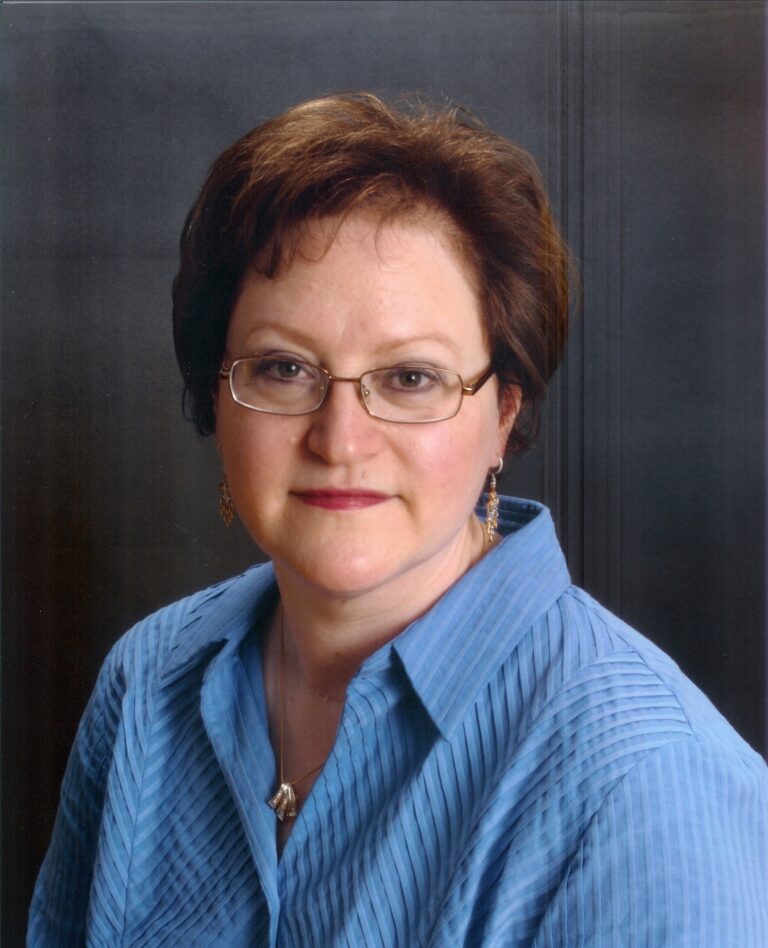
Barbara Krasner holds an MFA from the Vermont College of Fine Arts and a PhD in Holocaust & Genocide Studies from Gratz College, where she teaches in the graduate programs. Her short story, “The Newcomer,” won the 2024 Folio Prize for fiction and her fiction and poetry have been nominated for the Pushcart Prize multiple times. Her work has been featured in more than sixty literary journals, including Folio Literary Journal, Consequence, and Michigan Quarterly Review. She lives in New Jersey.