
ISSUE 12.2
SPRING 2025
welcome
issue contents
> fiction
> nonfiction
> poetry
> art
contributors
interviews
our editors
Tricia Steele
Joy Plunging
“Write down something you want to let go,” I whisper.
The teenager sitting beside me broods. His mood mirrors the scene: dark, with a storm threatening in the distance. He stares at the nearly flat water lapping the island shore. Before dorm drop-off, I am trying to make a mother’s magic with bits of paper and a purposely hushed voice. The ocean shushes as we pass the pen among us three: dad, stepmom, and a son we are fighting to keep alive.
No one shares, but I write: the need to control everything. Silently, we ball up our scraps and heave them into low, dark waves. The tiny wads slowly recede with the tide—white dots bobbing—and I lighten as they vanish. I hope he does too.
Three years later, I sit alone. A wooded campground nestles next to the ocean’s eddy just below Myrtle Beach. Conserved as a stop for migrating birds along the eastern seaboard, this island of wilderness sits humbly amid sprawling progress.
Being here means survival; we can leave home without worry. The age of throwing scraps into the ocean held an overdose that became a coma. Dropping out of college became new treatment and new thinking and eventually a turn toward life.
A parent’s struggles footnote any child’s fight, especially mental health. But, I am carrying passengers: calcifications in the base of my head, talc granules at the base of my right lung. A dozen diseased organs have been removed or repaired and my bones are less dense.
The sun flirts with the horizon. On this day, on this coast, I’m crossing into my forties and marking one full year without involuntary pain. I sit convinced by a spate of recent science books: I must swim this frigid winter water.
As the wind changes, I realize I have shifted this year from seeking remedies for survival to seeking discipline for discovery. Cold-water immersion has abundant purported benefits, chief among them: happiness.
I huddle under a plush blanket and peel off the layers warming me. Before I can change my mind, I scurry out from the heap like a crab from an outgrown shell to soak up the sun’s warmth. I fling myself into the forty-something degree foam.
Time crawls. As the water slaps my toes, I gasp. My calves plunge; shallow breath quickens. The cold grips my thighs; distant sounds gurgle in my throat. Waist submerged, legs tingling, toes frozen, laughter erupts through chattering teeth.
When immersed, the body reacts quickly to maintain its core temperature. Vessels constrict to pool blood in vital organs; brown adipose tissue releases stored energy to create heat; the brain floods the body with feel-good chemicals (dopamine more than doubles; adrenaline may quintuple).
In practice, every part shivers. After aching, though, the pain backfills with joy—like water rushing into depressed sand.
I keep walking until I float. A wall of sensation wraps me, silencing both wonder and worry; I never want to leave. I remember that other day at the ocean when, it turns out, our teenager had thrown in a crumbled blank. I wish we had thrown our bodies in then, not been so timid about our desperate need for rescue.
Now I am the wad of paper—bobbing, bouncing in the waves, surrendered. Birds rely on this much-needed stop when migrating south. Is my son still heading toward health? Am I? Coldness knifes away the numbness, and I start back for the shore, grinning wildly with each step.
Control is an illusion. We have only the choice to receive or resist the waves. We can accept and act or deny and drown.
The shivers subside. The burst of energy melts into a sleepy calm. The vigor of the morning evaporates like the water on my skin, but joy settles like salt. Before long, hunger pangs will prompt reflection’s end.
Many days, my body’s history, neediness, exhausts me. When my body fails or turns against itself, I see it as an interruption to the real life I think I’m living. But the notion that my life, my identity is somehow separate from my body is an illusion.
I am not an athlete or a model—I need not tend my body’s performance or appearance quite so obviously. I am not a laborer or craftswoman, surgeon or stripper. For all the interruptions, I’m still able to earn a living with my words (though some moments of my journey have stolen them).
I scoop up some earth with a broken cockleshell. Many like me or my son—facing conditions with limited treatment choices—wash up, unable to always contribute in ways the world recognizes. In those times, the care of the body or mind becomes the meaningful work we do, failing some days even at that. Many people cannot afford the care or time we’ve been given.
Rich or poor, dull or degreed, we have these inescapable bodies, these common yet unique casings. Some are more fragile, more prone to injury or ailment. We are each trapped and dependent on them to live out the desires and obligations of our lives.
I look at the glinting skin draped on my frame. This barrier reef of ridges and bumps is like my coastline as I move through space and time. The seasons are often out of order, the storms unpredictable. And one day, this shell will return to the sea and the sand. The globe will spin. The foamy ocean will swirl.
I take a cue from the waves before me, constantly bringing in the new and washing away the old. Or my breath, constantly netting what is demanded and releasing what would be toxic. We bring in; we let out. We grasp; we surrender. We seek; we retreat.
Living inside my body and alongside others’ has forced me to accept what we inherit, to act where I can. Thankfully, the ocean has carried away my need to control everything—at least on paper—and taught me how to plunge for joy no matter the shore or season.

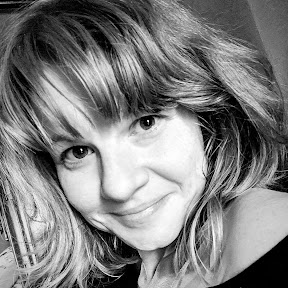
Tricia Steele is a science writer, memoirist, and mountain schooling mom living in North Georgia. A physics and philosophy student from Berry College, she recently completed her master’s degree in science writing from Johns Hopkins University. In between, she built and sold two technology companies. Her nonfiction essays have been published in The Science Writer, Science Spectrum, The Memoirist, as well as various newspapers, including The Washington Post. https://www.triciasteele.com/.