
CONTRIBUTOR SPOTLIGHT:
Interview with Jennifer Patino
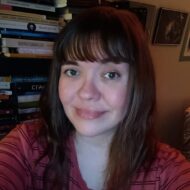
Rappahannock Review Poetry Editors: Something that caught our eye was how compelling the speaker is in “Fatherly Advice.” Their emotions such as their bitterness, or their anger, are so palpable in those first four stanzas. How did you go about developing their voice and characterization?
Jennifer Patino: This poem was birthed after I watched the Ingmar Bergman film Fanny and Alexander. There is a scene where cake is served after a father’s funeral and it struck me how the adults in the scene seemed to be celebrating as if nothing tragic had happened while his children sat beneath the table quietly observing. At the time of writing the poem, I had never met my biological father. As you can imagine there is a lot of bitterness and anger associated with the complexities of having been raised by an adopted father but also living with the mystery of not knowing the person who is half responsible for how you came to be. It’s like being born with an identity crisis, so to speak.
RR: The father is an interesting figure here, especially because he’s at the center of this poem despite not having much of a physical or verbal presence. What was your process in writing his influence while still creating that distance between him and the overall scene?
JP: The father is a ghost in the poem because he represents what it is to be haunted by someone who is a stranger to you even though they are still living. There is a lot of sarcasm in the piece. I used to imagine conversations with my father and having a bond of shared sarcasm about life in general, whether humor is used as a defense mechanism or just a way to lighten tough situations. I have since met him in person and we do share the same sense of humor. The closing lines about the father’s wisdom being “in absentia and obscure” turned out to be more truthful than I could perceive at the time. Even though he was absent for most of my life, some of the wisdom he shares with me now was still present in me even though I had no way of knowing that until now.
RR: We love the way this poem plays with sound and irregular rhyming; how do you approach working with rhyme and other sonic effects when you write?
JP: I am often shocked by the unintentional rhymes within a poem I’ve written because unless I set out to rhyme, it just happens. It’s almost as if it’s out of my control. When I read aloud during my editing process I get a better sense of the cadence of the piece and how these rhymes sneak their way in. To me, “Fatherly Advice” flowed like a song would in my mind. There’s these fun, disjointed rhymes throughout it. “Cake” in the first stanza, then “mistake” showing up in the second. I promise it was all accidental. When I’m finalizing a poem like this I often question if these rhymes make the piece less impactful. Then I realize after multiple readings aloud that it’s hitting exactly how I want it to sound-wise and I only have to tweak lines slightly to fit the rhythm that’s most appealing to me.
RR: We read in your blog post that you have the goal to ‘live the poet lifestyle’—are there any recommendations that have come out of your reading and/or experience so far?
JP: Obviously the best way to be a poet is to write poetry. I also recommend reading poetry and all kinds of it. I’m old school so I carry a notebook with me at all times. I love how the younger writers of today are swiping lines into notes apps and things like that. Whatever works for you, do that, but try to write at least a line every day. Sometimes I have bursts where I’m writing a draft every day for a month. Then I slow down on my output for a bit. I do highly recommend writing every single day though, even if a sentence is all you can manage. I also find having a writing community to be involved in to be very helpful. When I was in my early twenties, I lived in an area that had a little literary scene so there were opportunities to share work at open mics and poetry readings. Despite my shyness and fear of public speaking, I did enjoy attending these and forming friendships with other writers. Here I am, nearly twenty years later, living in a place that is very supportive of the creative arts once again and it’s been great reconnecting with that kind of scene. I still tremble at the microphone but I can keep my voice steady.
People write poetry for all kinds of reasons. Some choose to publish and some choose not to. These days it’s very easy to get your work read whether you self-publish chapbooks or share poems through blogs or social media. There also seems to be an infinite number of literary magazines both online and in print to submit work to as well if you want to cast your net wider. I would also advise the poet not to be bothered by the amount of acceptances or the amount of rejections you receive. The important thing is to write and learn various types of forms so you can play with them and make them your own. Poetry for me is a way to alchemize life experiences. I find myself wanting to transform them into something else on the page. When I feel I achieve this is when I’m happiest with my work.
RR: What kinds of poems are you most drawn to reading, and how has that influenced you as a writer?
JP: I am so obsessed with poetry that I’ll read anything you put in front of me. I love everything from the classic poets like Keats, Whitman, and Blake to the current poets who are writing on Substack, Instagram, and WordPress, and everything in between. I find myself drawn to specific poems that I find relatable or poems that have a particular sound when they’re read aloud. Lately I’ve been reading Olav H. Hauge’s Luminous Spaces and Jim Harrison’s Letters to Yesenin. I’ve also fallen in love with Bob Dylan again. His lyrics and poems speak to me very loudly at this time. I love the beats, I love the confessional poets, I honestly love it all. Every poet has their go-to poets and mine are Sylvia Plath, Ted Hughes, Anne Sexton, Sherman Alexie, and Janet Frame. I’ll return to their works most frequently and refer to them as my “Fave Five.” The more I read, the more I am influenced because then I can enjoy trying my hand at a particular style or subject matter that I never tackled before. Also, I find that reading poetry every day reminds me that I too am contributing to an art form I adore. The best way to keep a fire burning is to feed it and in my experience, that applies to creative endeavors. I do my best to not allow those embers to smolder out. The wonderful thing about it is that there are so many poems to read that I’ll never be able to consume them all. And there are even more poems being written every single day. There is enough kindling to last me for the rest of my life.