
CONTRIBUTOR SPOTLIGHT:
INTERVIEW WITH KATARINA YUAN
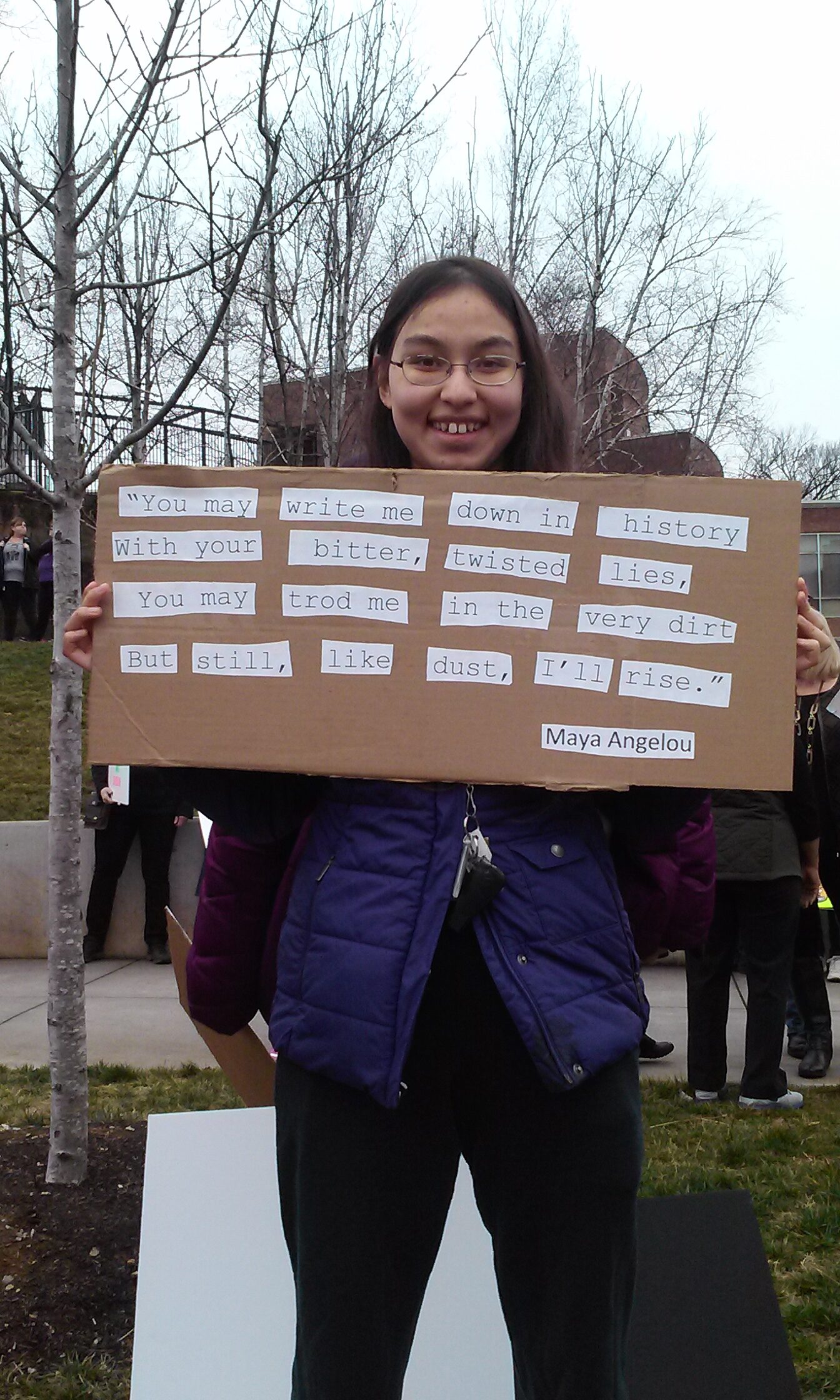
Rappahannock Review Poetry Editors: “Chryseis / Astynome” deals with the daughter of a priest of Apollo that Agamemnon captured in the Iliad. We love the idea of giving a voice to an otherwise background character, showing that each character has their own epic to live. What made you choose Chryseis in particular?
Katarina Yuan: The female characters in Greek and Roman epics have always fascinated and repulsed me. They often hold such power (such as Dido’s rule of Carthage in the Aeneid), but most inevitably are objectified or die tragically by the end of the story. Every once in a while, I try to reimagine an epic from the perspective of one of the female characters in an attempt to reclaim them. I chose Chryseis because she epitomizes the powerlessness of women within the Iliad: just a spoil of war. But her worth to another man (her father) makes her incredibly powerful: the cause of the plague that nearly decimates the Greeks. Her worth as an object renders her simultaneously helpless and extraordinarily influential. I wanted to explore that contradiction.
Simultaneously, Chryseis was my entrypoint to thinking through disease in the Iliad. At the start of lockdown, I was thinking a lot about the culpability a person has as a potential disease vector. Chryseis, as the reason for Apollo’s plague, epitomizes and exaggerates that culpability. Simultaneously, like anyone in a plague, she has no control over the course of the disease—Chryseis is a victim who has no choice but to watch the terrible events unfold around her. I wanted to explore her feelings of helplessness within events larger than herself to understand my own feelings of helplessness throughout the lockdown.
RR: There’s very little information of Chryseis in the Iliad, yet you made her feel fully developed in your poem. How did her character come together for you?
KY: We know very little about Chryseis, but we know a fair bit about Helen of Troy/Sparta. The two women are actually in a very similar position: a prisoner who embodies the worth of a man, whose capture sparks a great catastrophe (the plague vs. the Trojan War). When thinking about Chryseis, I thought about the few lines Helen gets in the Iliad: railing at Aphrodite about the goddess’s interference in her life. I thought about what Chryseis would say to Apollo, a god who similarly meddled in hers. Chryseis’ voice came quickly after that.
RR: Towards the end of the poem, there’s a change in format using backslashes between quick bursts of thought, and we love the sense of urgency that creates as she pleads for Pandora. What inspired you to bring Pandora into this poem in this way?
KY: I was thinking about two Greek myths on the origins of disease: Apollo’s retributive plagues aimed at those who displease him, and Pandora’s releasing of plagues from her box/jar. While Apollo has complete control over disease and enacts it as a kind of justice, Pandora acts as a scapegoat for humanity’s woes and a victim to the gods’ schemes. As I wrote this poem, I realized these two myths were incredibly gendered, and I couldn’t give agency back to Chryseis without also trying to reclaim Pandora. I depicted Apollo as failing Chryseis, so she turns to the other root of illness in the hope of finding a kindred spirit.
RR: Greek mythology is one of the most popular mythologies out there and one that, even if they aren’t into it, people know something about it. Are there any obscure myths you know that most people don’t but you just love?
KY: I don’t know many obscure myths, but I have a fondness for the obscure details in myths we know well. For example, I think most of us know that Perseus beheads Medusa and uses her head to turn people into stone. But in Ovid’s Metamorphosis, Medusa’s head can also turn plants to stone: creating the first coral. Italo Calvino wrote an essay (“Lightness”) on why this image is so evocative for him, but I just love how a story you know by heart can still surprise you.
RR: We see that you’re studying both English and Biology. How does your interest in science make its way into your poetry?
KY: I don’t think it influences how I write poetry so much as how I read it. “Form fits function” is a saying in physiology, and it’s just as true for poetry. Instead of looking at the shape of limbs or organs, poets look at the shape of a line or stanza. Instead of asking how form benefits survival and reproduction in a given environment, we ask how it conveys emotional meaning. I think my love for poetry and my love for biology come from the same place: an obsession with patterns in form.
Katarina Yuan’s work in Issue 8.3: