
CONTRIBUTOR SPOTLIGHT:
Interview with Barbara Krasner
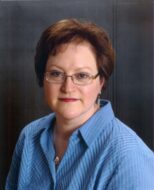
Rappahannock Review Fiction Editors: “Tesserae” begins in the midst of World War II. When creating the family dynamics, how did the war influence their characterizations?
Barbara Krasner: This story is based on my great-uncle and his family who found themselves on the Soviet side of the now occupied Poland. Refugees poured into their village of Zaromb (accent on the first syllable) and word of mouth got around about the round-ups and mass killings by the Nazis just a short distance away. It was a time of chaos, turmoil, acknowledgment of what was happening to the Jewish populations, and heart-wrenching decisions whether to stay or go.
RR: What kind of research did you do to portray the time period accurately?
BK: I have a doctorate in Holocaust & Genocide Studies. A paper I wrote for a course on Geographies of the Holocaust focused on the experiences of my maternal grandfather’s family that lived in both Nazi- and Soviet-occupied towns although only eighteen kilometers apart. In a published academic paper, I addressed the situation about being caught between a rock and hard place in November 1939 when the Soviets opened the border for fifteen minutes to push refugee Jews back to the Nazi side. I consulted German, Polish, and Soviet state records to verify the event. But also as a genealogist since 1990, I knew this was my family’s story and I also consulted the Holocaust memorial books (in translation) for both Zaromb and the Nazi-occupied town of Ostrova (Ostrow Mazowiecka in Polish), where another great-uncle lived and a good number of my mother’s maternal family. I should also say I personally visited Zaromb and Ostrova in 2008, had excellent tour guides who understood Jewish history, and I took a lot of photos. It’s important to me to have stood on the ground. I’ve seen the Soviet trenches, for instance, in the pine forest.
RR: The jarring ending makes the story feel unresolved, leaving the family’s future up in the air due to factors beyond their control. What made you want to end the way you did?
BK: There was no framework of reference for what was to come, so families made the best decisions possible based on what they knew and their assumptions about the future. In “Tesserae,” I wanted to focus on the separation of the family due to circumstances beyond their control. But they did have some agency in this story. They could decide to leave or decide to fight back. Maybe at some point this will turn into a novel or a collection of connected short stories.
RR: We’re drawn in by the details, which gives this story its historical heartbeat. How did you make decisions about what to include and exclude from that history?
BK: I can’t say that I excluded very much. It’s important to me that readers put themselves into the setting of my stories. I want them to feel the mood and tone of the place. The details are vitally important and they wouldn’t have been possible if I hadn’t stood in the marketplace, walked the streets, etc.
RR: How do you approach fictional characters navigating real-life tragedies, and what are some of the challenges you’ve faced in writing those?
BK: Again, my fictional characters are mostly based on family members. The real Yankel Dovid survived the war in Uzbekistan, returned briefly to Poland, and then immigrated to Israel, where he died in 1962. I didn’t know this story until his granddaughter, whom I contacted through the now defunct Bureau of Missing Relatives in Israel, related it to me. The real challenge is giving the writing pathos and ensuring characters’ choices are believable. Just because something is true doesn’t make it believable. I also want to make sure I don’t trivialize events and choices.