
CONTRIBUTOR SPOTLIGHT:
Interview with Katherine May
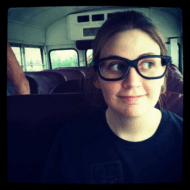
Rappahannock Review Fiction Editors: “Palos Verdes Blues” has an interesting plot surrounding the consequence of Samantha and Beth’s relationship and the results from it. Where did the contents of this story come from?
Katherine May: This story underwent an enormous transformation from my first sketch of it to the final version. Originally, the focus of the story was the connection between Samantha and Laura at the reunion. There wasn’t nearly as much emphasis on or exploration of Samantha’s relationship with Beth. However, as I altered and expanded the story, I realized I needed to give more weight to that backstory to explain why Samantha feels such shame and such an inability to connect. It’s not just that Beth is missing; it’s that Samantha thinks she caused it. How would you move through the world if you thought you were the reason someone you loved was never seen or heard from again?
RR: The overall theme of the story focuses on moving on and not letting the past haunt you. Can you describe why you find this message important?
KM: This question made me laugh a little bit, only because I think my friends would tell you “haunted by the past” is sort of where I live. For me, the story is less about moving on, and more about a profound change of perspective. Laura gives Samantha a totally different way of viewing her “ghosts.” That’s what resonates with me.
RR: Can you go into more detail about the “change in perspective” you describe?
KM: The encounter with Laura at the reunion (in particular, their conversation on the terrace) shifts Samantha’s view of the past almost completely. She’s forced to view her relationship with Beth in a different light, the level of her culpability in what happened to Beth, the reasons why she’s been punishing herself for years, even her assessment of Laura’s personality and motives. That’s not to say that the version of the past that Laura serves up is entirely correct either, but for the first time, Samantha begins to see all the different angles. In the end, I believe she remains fairly “haunted,” but perhaps the ghosts look a little different, less threatening.
RR: What stuck out to us was how natural the characters feel and how fluid the dialogue was. What was the process of writing that dialogue?
KM: What a fantastic compliment! It’s only within the last few years that I’ve come to see my dialogue as more of a strength than a weakness. Often, a conversation between two characters will be my entryway into a story. In this case, the conversations between Samantha and Ruby (in particular the one at the cafe and the one at the end of the story) were set in my mind from almost the very beginning. The conversations with Laura were more difficult to put together because I was trying to balance a lot of different tones from resentment to flirtation to sincerity. I think I took some of that dialogue over the top in earlier drafts. Fortunately, I have some great critique partners who help me pull back when I’ve gone a little too far into melodrama.
RR: Your bio states that you write about “awkward interactions, ambiguous connections, and in-between moments”, which is shown in this story. Can you describe what makes this kind of writing important?
KM: I don’t know if I’m qualified to speak on their “importance,” but I will say that those uncomfortable moments are the ones with the most potential. I always find out more about my characters when I put them in those types of “out of character” scenarios than I can in hours of building routine character outlines. There’s always more truth to be revealed outside of your own comfort zone.
RR: What is your most outdated form of media in your collection?
KM: This is more media-related than actual media, but the first thing that came to mind was my video cassette rewinder. Excellent gadget.