
ISSUE 13.1
FALL 2025
welcome
issue contents
> fiction
> nonfiction
> poetry
> art
contributors
interviews
our editors
Dariana Alvarez Herrera
Lazarus
I felt complete shock run through my body when I saw Papá walk in through the door. After three months of excruciating pain, a week in the hospital, and five days being bedridden without showering, my father limped through the house, and I felt like I had just watched Lazarus come out from the tomb. An even rarer sight was the tears my father cried.
“You don’t understand, Mamá,” he told me in Spanish. “I got up and wanted to shower, so I prayed so hard, and look! God let me walk again.”
Because of Papá’s excitement, I didn’t want to burst his bubble. I didn’t want to tell him that he would’ve been able to walk again whether he prayed or not. He wasn’t paralyzed, and he needed to stop pushing his body to do things it wasn’t quite ready for.
Papá limped to the air mattress that I sat on in Tití’s living room and gave me a kiss on the forehead that unnerved me.
The day before my trip to Puerto Rico, Tití called me to let me know that my air mattress and fan were ready and that Papá had found God again.
“Are you for real?” I asked her in Spanish.
“Yes, we’ve been praying so much for you and him. He said he wanted to stop drinking, isn’t it wonderful?”
“Yes,” I lied.
Papá had “found God” before. I was seven years old and intrigued by Bible stories that they told me during children’s church, and my father, the drunk who always started fights and cursed like a sailor, prayed pretty much twice or three times every day for a good hour or so. He’d be on his knees, and I’d join him, although I wasn’t sure what you were supposed to tell God. I thought about thanking God for finally getting us some sense of normalcy. Papá had stopped drinking, and he wasn’t fighting with Mamá so much. The best part for me was that on my eighth birthday later that year, Papá had taken me to the zoo which he had never done before because he was too busy drinking at home. There was something terrifying about talking to someone who could take it all away with just the snap of divine fingers.
“What do you pray about?” he’d ask me.
“I pray for you and Mamí, my sister, brother, teacher, Tití, and everyone else I know,” I’d say, thinking that was the right answer.
Months later, Papá picked me up from school, and there was the familiar scent of beer in the car. He had the bass up in his car, and I covered my ears with tears in my eyes. Papá screamed at me not to cover my ears because somebody might think he was trying to hurt me. While he parked on the side of the road on the way to his friend’s house so that he could grab my hands away from my ears, I finally prayed to God. I kept begging him to let us live.
Papá parked next to his friend’s trailer. They drank cans upon cans, and I sat on the steps ignoring whatever they were laughing and talking about.
I stepped into the shower. The cold water washed me like my baptism. I grabbed my wash cloth and rubbed the bar of Dove soap onto the cloth. As I washed my brown body, the image of Papá limping into the house was stuck in my mind.
I wanted to talk to him and tell him that he needed to stop rushing the recovery process and that he had to stay in bed.
I rinsed the soap off my body and dried myself with the towel that Tití had gotten angry over when I unpacked my bags.
“When you fly to see family,” she had said with her stern voice that I had grown so accustomed to in my childhood, “you don’t bring a towel. Family always provides. You know Tití won’t ever leave you without.”
Then, I heard Papá’s voice from the shower. It sounded like he was speaking to someone over the phone.
“I had gotten up, see, I had the urge to shit and I hadn’t done so since the hospital that I rolled over on the bed, put my feet on the ground, and, before I got up, I said, ‘Satan, I rebuke you in the name of Jesus,’ and I stood and walked to the bathroom,” he said. “Your sister’s here for the week; she came from the mainland just to surprise me!”
After Papá had spent some time getting diagnosed and treated at the hospital, my sister had come over to Titi’s house every night for a couple of weeks before I flew in to give Papá his injections. Once Papá had all of them, she had stopped coming around, and only texted Papá or Tití every so often to check up on him.
I thought about the time when my sister had come up to Abuela’s house last summer, where my boyfriend and I were staying.
“How did Papá treat him?” she asked.
“He was nice to him, I was surprised,” I told her. “Papá hugged and kissed him and everything! He told him, ‘You Americans shake hands, Puerto Ricans kiss’.” My sister then told me that Papá was doing cocaine.
“Don’t tell anybody,” she told me. “Tití cried when she found out that I knew. She kept crying and crying, and she told me, ‘Don’t tell la nena, that would crush her!’” I thought about how Tití never cried and how she must’ve gotten serious with my sister about not telling me about Papá’s drug problem. I always had this inkling, however, that my sister was secretly the jealous type. People would tell me how Papá would talk about me, and my sister seemed to always have a visceral reaction. Either it was a fight, stonewalling, or passing the comment of “well I’m your daughter, too!”
I took a shower after my sister had left the house. I couldn’t stop thinking about Papá and his cocaine. Was he doing it that night as I cried underneath the showerhead? I wanted to shrink and fall into the drain.
I stepped into Papá’s room. His clothes hung all over the place on drying racks. My friends back on the mainland were always shocked when I explained to them that dryers weren’t common in Puerto Rico. I jokingly told them that we hung them because we weren’t lazy enough to let machines do the work for us. I looked at the clothes. I remembered some of them. Papá’s toolboxes were scattered throughout the room along with his machete hidden behind one that was closest to the wall and a guitar with a broken string was displayed next to his bed. Papá sat on the edge of the bed where he was eating last night’s leftovers. I looked at the bowl of white rice smothered in pollo guisado and habichuelas and remembered how Papá said that he thought rice and beans were always best eaten after they’ve been microwaved.
“Look, Mamá,” Papá said as he pointed to the TV that stood just five feet away from his bed.
On the TV was old footage of a preacher talking about miracles and prosperity— things that I had always grown up hearing, but experience had taught me not to quickly believe. “I’ve seen some shit, I’ll tell you,” Papá said. “God performs so many miracles at those things. I once went to one here in Fajardo. There was a church, no AC or anything, with big microphones and speakers, and we had service from 7:30 to almost midnight! People fell to the ground speaking in tongues and running around. God never gave me that experience, but I remember some kid came in with one thumb smaller than the other, and God healed him!” I smiled and nodded. I wanted to tell Papá that I barely believed in stuff like that anymore and that I only felt like a Christian on a good day. I couldn’t care less about a thumb slightly shorter than the other. I wanted someone to show me a man in a wheelchair suddenly start to walk or even a dead person breaking out of their casket and then maybe I’d believe in the Pentecostal shit. Miracles for me were a stage act. People saw them and when they couldn’t explain them they were quick to credit God. If God could still perform miracles, I wanted him to do a big one for me and Papá.
My religious conversations with anyone in the family were minimal. I wasn’t willing to discuss why I affirmed the theory of evolution over a belief in a literal interpretation of the creation story, or why I didn’t believe that God is a man and that there was nothing wrong with being gay.
“Do you go to church back in the States?” Papá asked me.
“Sometimes,” I lied. “I just prefer to do my own thing.”
Papá looked at me. He had lost a lot of weight from his time at the hospital and the medications he had taken.
“You know you could go to hell for not going,” he said.
I shrugged at Papá. If it wasn’t him, Mamá was for sure the one to constantly remind me of hellfire and how I deserved it for abandoning the faith. It wasn’t like I didn’t know Papá would attend church regularly the next couple of weeks and then slowly stop going when he got tired of hearing the same message over and over again about how the world was ending and that everyone needed to repent. I didn’t want to say a word, in case the universe decided I deserved to be proven right.
“Ah, you are just like your mamá,” he said. “She would always shrug at things and it’d piss me off!”
“Papá, please,” I told him. “I don’t want to hear about how much Mamá did you wrong.”
“Your mamá never could get her shit together! Never cared about anything! You tell me, when it was time to go to church and I couldn’t brush your hair, what did we have to do?”
I stayed quiet.
“Tití had to do it, didn’t she? Why? Because Mamá didn’t care enough about you and I didn’t know how to do hair, so what else was I supposed to do?”
“You can’t act like every single thing is her fault,” I finally said.
“And you know what, I wanted to leave her for so long but the only reason I stayed was for you! If I left I knew you’d feel alone and you wouldn’t have anybody to pay actual attention to you! Your mamá…”
Papá saw that I had started crying.
“Stop,” I said. “Please stop.”
Papá had gotten quiet.
“Forget what I said,” he said after I started wiping my tears. “It’s probably bad for you to be hearing all of this anyway.”
I got up from his bed and walked back into the living room. He had this nasty thing where he was quick to backtrack if he said something that clearly struck a nerve. Papá, despite being like God to me once, wasn’t sinless. He constantly brought up Mamá and her “failures” and was slow to apologize for anything.
I got on the mattress and tossed and turned my body. A few minutes later, Papá entered the room. I pretended to be asleep, and—regardless if Papá could tell or not—he let me lay there.
One summer before my sophomore year of college, I visited Papá in Puerto Rico, and on the night before my flight back to Florida, Papá came back home late, a pack of Bud Lights in his hand. I followed him to his room.
“Why’d you spend all your money on that shit?” I asked.
“Because I’m thirsty, Mamá. I worked hard today.”
“Then just drink water or juice,” I said.
I hadn’t realized how ridiculous my response sounded.
Papá laughed. The pack of Bud Light lay on the ground next to his bed. I constantly looked down at it.
“I want you to stop,” I told him.
“I can’t stop, Mamá,” he said. “I’ve always been like this.”
Even though I tried my hardest to keep from crying, I couldn’t contain myself. Papá wrapped his arm around me.
“I just don’t want to lose you like this.”
“Mamá, everyone will die one day so you’re going to lose me no matter what,” he said. “I don’t like seeing you cry.”
I told Papá to look at everything he had lost— how he no longer lived with us in Florida, he was always without a job, and he was functionally homeless living with his sister and had no plans to move out.
“Maybe one day, I’ll stop. You’ll see.”
The next morning, Tití and I had dropped Papá off at work. My flight had gotten delayed, and we drove back to pick him up when his shift was over. An Indigenous man with long black hair who worked with Papá came up to our car.
“He already left, he finished work early and headed out to the bar.”
I started to cry, and Tití held my hand.
“He loves you so much,” she told me in Spanish. “He just couldn’t handle saying goodbye to you again. He cries every time you have to go.”
I sat there, knowing that Tití often said these things to make me feel better, and to make me feel like things weren’t as bad as they really were.
Tití handed me a pair of sneakers on my last day of my visit.
“Since you’re going to be a teacher walking around with children, I thought you might need these. See if they fit you,” she said. “I think Papá might have extra socks for you to try on in his room.”
I took the shoes to Papá’s room.
“You leave today?” he asked, though I was sure he knew the answer.
“Yes. I need some socks,” I told him.
“You have tiny feet, but you could wing it.”
Papá looked through his socks and handed me a pair of dark gray ones with neon green lines that marked the heels and toes.
“I’m sorry that they are ugly,” he said.
I put the socks on, the green markings stuck out of the shoe.
“Baby, you can’t go out looking like that,” he said. “People will make fun of you.” Papá let out a painful groan when he crouched down on the floor and slowly fixed my socks as he breathed in and out. I stayed quiet and watched him when he put my shoes on my feet and tied my laces.
“You don’t have to do that part,” I told him.
“Ah, but you see how Papá still takes care of you,” he said.
Papá got up with another groan and gave me a hug and kiss goodbye.
“I love you, don’t think about what we talked about, okay? I’m going to miss you so much,” he told me as Tití waited at the door for me with my luggages and a smile on her face.
I got to my apartment at around midnight, and called Papá.
“Please, don’t ever do this again,” he told me.
“Do what again?”
“Book a flight back at night! Make sure the flight is during the daytime. I don’t like you driving around on the highway late at night.”
“Okay, I’ll try not to next time,” I said, rolling my eyes but feeling an odd sense of satisfaction at Papá worrying over me for something I thought was so trivial. I laid in bed after the call and thought about how this wouldn’t last long. I’d call again next week and there’d be no answer.
Hey, Papá, I miss you.
Papá, how have you been?
I love you.
Text me whenever you get a chance.
I gave it a month before he’d get back to drinking.

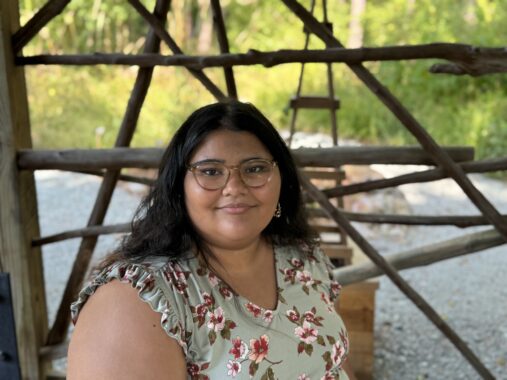
Dariana Alvarez Herrera is a Puerto Rican writer and MFA candidate at Antioch University whose work has appeared or is forthcoming in Bridge Eight Press, Oyster River Pages, the I-70 Review, and The South Florida Poetry Journal, among others. A Pushcart Prize nominee, she is also the fiction editor at Lunch Ticket.