
CONTRIBUTOR SPOTLIGHT:
Interview with Riyad Carey
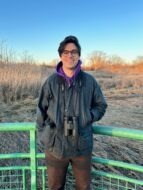
Rappahannock Review Poetry Editors: “Japanese Garden” provides a homely perspective to natural imagery. For example, the greenery above the pond is valanced and the sky is likened to a curtain. Why did you link the domestic and natural?
Riyad Carey: For me, a lot of the fun of writing comes in discovering what a poem is going to be about through the process of writing about a distinct image and linking that image to something unexpected. In this case, the image was that of branches hanging in front of me; the rest of the poem flowed from that.
RR: “Japanese Garden” explores the motion of inanimate objects. A laugh skips, seconds bend. These instances give such authentic depth to the piece, as if the poem, despite being inanimate, is living and breathing itself. What was your process in crafting such vivid imagery?
RC:I wanted to find a way to capture the motion and tension that existed in that moment, so I looked for any opportunity to infuse that into the piece. Because the subject is pretty simple, this required applying motion to some objects that don’t move in a traditional sense.
RR: In “Grass Growing, Leaves and Snow Falling” you create a beautiful juxtaposition between the serenity of life and man-made invention. Why did you choose to button this poem with a mention of machinery?
RC: The mention of machinery was necessary because this poem was really just me having a bone to pick with the suburbs, specifically how it’s harder for me to really enjoy nice days there because of the constant drone of lawn mowers and snow blowers.
RR: Both of these poems convey strong imagery in a short form. What was it that drew you to this length?
RC: I’ve always preferred concision and I think that, as a relatively new writer, it’s easier for me to really hone in on a specific idea or image at this length; sometimes I can lose the thread in longer pieces.
RR: What would you like to be the main takeaway the reader receives from both of your poems? We’d love to know what you think is most important, whether in terms of them read separately, or together!
RC: I’m a believer that once art is out in the world, however an audience interacts with it is the correct way; hearing reactions that are different than what I had in mind when writing can be part of the fun. I think the poems are pretty different, and I didn’t write them in conversation with one another, but maybe there is some throughline regarding the interaction between humans and nature.